
GUEST FEATURE – Lifestyle Ambition: How to Design a Life You Don’t Need to Retire From
GUEST FEATURE – Lifestyle Ambition: How to Design a Life You Don’t Need to Retire From
A throwback episode originally featured on BetterWealth with Caleb Guilliams, where Paul shares hard-won lessons on ambition, faith, and designing a life you don’t need to retire from.
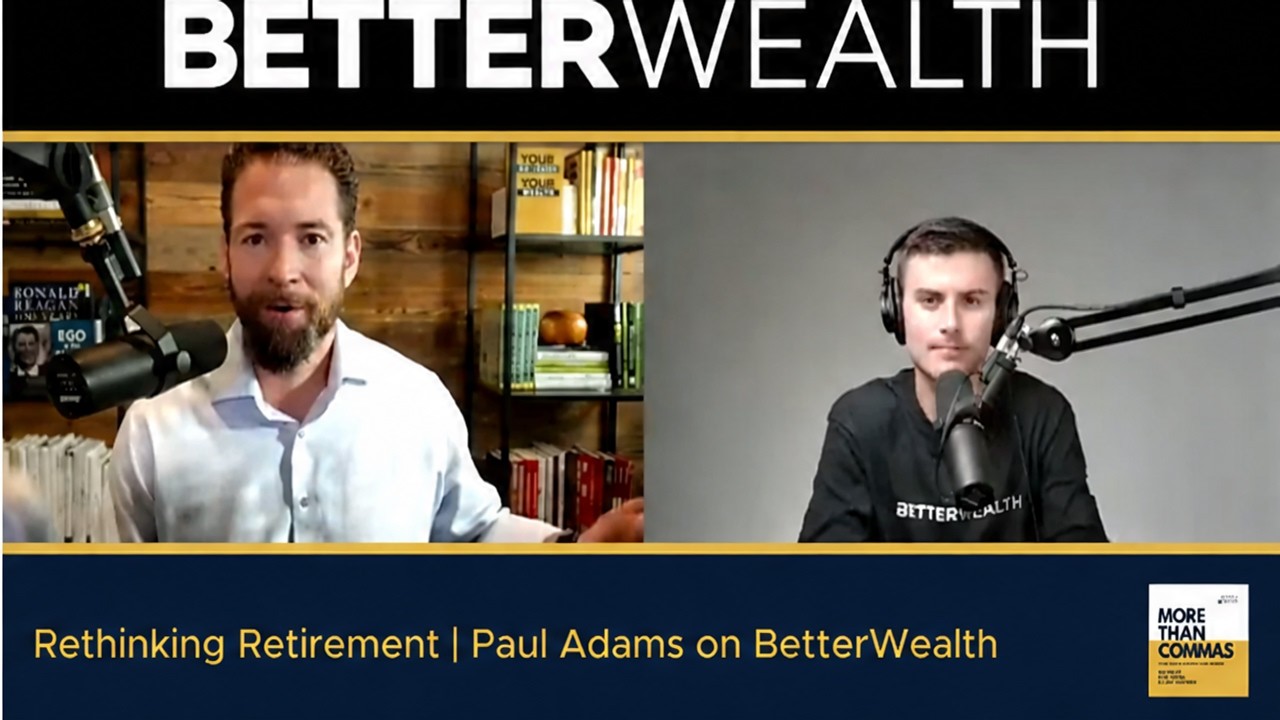







This is a throwback episode of mine, originally featured on BetterWealth with Caleb Guilliams. In it, I share my own path from chasing career ambition to defining what I call “lifestyle ambition”: sitting down and getting clear on what you actually want your day-to-day life to look like before you build a financial plan around it. Caleb and I dig into why “retirement” has become such a loaded word, why business owners often can’t count on their business as a retirement asset, and what it means to actually build a personal balance sheet outside the business.
By the end of this post, you’ll know how to separate your career ambition from your lifestyle ambition, why “retirement” might be the wrong goal to aim for, and how to start designing a life you don’t need to retire from.
Key Takeaways:
- Career ambition and lifestyle ambition are two different goals, and most people only plan for one.
- “Retirement” is a newer, narrower word than most people realize, and it may not be the goal you actually want.
- Business owners often overvalue their company as a retirement asset. The payout rarely replaces the income the business was producing.
- Financial independence should fund a work-optional lifestyle, not an obligation to stop contributing.
From Career Ambition to Lifestyle Ambition
I spent roughly ten years building a financial firm in the Pacific Northwest, chasing a specific title and a specific contract. When that contract ended, I had to start over from a blank slate. My wife asked me a hard question: did that mean the ten years were wasted?
My answer was no. The experience taught me what I’d left out the whole time: a real answer to what I wanted my lifestyle to look like, not my job title, but how much vacation time I took, how much time I spent with my family each day, and what time I wanted to be home at night.
Once I rebuilt with that in mind, I restructured my business around the life I wanted instead of the other way around. That’s part of why my family now spends around 80 nights a year in our RV.
What Is a Lifestyle Ambition, Exactly?
A lifestyle ambition is simply how you actually want to live, separate from your job or business. My starting point: write down what you want your life to look like a year from now, with no reference to career or business goals at all.
From there, split those aims into two levels.
Sufficiency vs. Surplus
Sufficiency is the income needed to pay your bills with no painful compromises. Surplus is everything above that. Many people are already living in surplus without realizing it, which is why sketching out sufficiency on its own can reset a lot of assumptions about what you actually need.
Once lifestyle aims are set for one, three, five, and ten years out, the next step is pricing them in today’s dollars. Only after lifestyle aims and financial aims are in place should career or business planning start. Most people do it in the opposite order.
Why “Retirement” Might Be the Wrong Word
Historically, “retirement” wasn’t used to describe people. You’d retire to a room for the evening, or retire an old horse from work. It wasn’t until Social Security launched in the mid-1930s that the word started applying to human beings.
By the 1970s, people were living longer and Social Security’s value was shrinking with inflation. The retirement habit needed a new sponsor to keep going, and the financial services industry stepped in with one product after another, often without much real education behind it.
The deeper issue: almost nobody actually wants to become “valueless” or step away from contributing to the world. People say they want retirement because it’s the expected answer, not because it reflects what they actually want.
What Should You Aim for Instead of Retirement?
Caleb and I point to financial independence for a work-optional lifestyle. It’s a small shift in language with a big difference in practice. The goal isn’t to stop contributing. It’s to reach a point where working becomes a choice instead of a requirement.
My faith shapes this directly. I don’t see a case for simply stopping and doing nothing. My own mother, more than a decade past retiring from a demanding career, is now busier than almost anyone I know, pouring into her community.
Where to go from here
- Want to talk it through? Get in touch with us.
- Curious about the framework? Download the Who We Are and Why It Matters white paper.
- Want the numbers for your own life? Run your own retirement projection with our free tool.
Can You Retire on Your Business’s Balance Sheet?
Employees climbing the corporate ladder already understand something many business owners miss: you can’t retire on your employer’s balance sheet. Business owners, on the other hand, often look at their company’s valuation and mentally treat it as their retirement account.
The math rarely works out the way it feels like it should. A business generating $400,000 a year might sell for around $2.4 million at a solid multiple. After tax, that nets closer to $2 million, which might generate $80,000 a year in investment income. That’s a steep drop from the income the business was producing.
That valuation can quietly stall owners into inaction. Believing the business itself is the retirement plan makes it easy to skip setting aside income into assets outside the business. Most businesses that fail to sell fail for the same reason: the owner discovers what the business is actually worth, and it’s less than assumed.
Why Should Business Owners Build Wealth Outside the Business?
One anonymized example: a client had a legitimate $26 million offer for their business four years ago. After COVID and market shifts, that business is now being wound down with no buyer. The only reason that family is financially secure today is because they’d been building a personal balance sheet, separate from the business, all along.
The fix is simple to describe, if not always easy to do: set aside a fixed percentage of income (I suggest 20% as a starting point) into assets outside the business every year, regardless of how well the business is doing.
What’s the Legacy Question, and Why Does It Matter?
If this were your last day, and you couldn’t leave behind any of your books, videos, or other work, but you could leave one final conversation, what would you make sure to say?
I turned that question on myself. For at least two decades of my career, I was, in my own words, the quintessential Type A: a “big freighter moving through the water” who got things done but left an emotional wake behind me. It wasn’t until I grounded myself in what the Bible teaches about how to treat people that things shifted. A breakthrough in January 2020, just before the pandemic, changed how I treated my spouse and children.
Partway through the 2020 lockdowns, my wife told me she was grateful to be quarantined with the person I’d become, and admitted she was afraid of what it would have been like to be quarantined with the old me.
My answer to the legacy question: if I could offer my children one thing, it would be to move through life and treat others the way our faith teaches, instead of the way the world teaches.
“What we want instead is definite financial independence, for the sake of funding a work-optional lifestyle. Not retirement.”
Retirement was never really the goal. A life you don’t need to escape from is. Whether that means rethinking how you fund your future, how much of your net worth lives outside your business, or just sitting down to write out what your day-to-day life should actually look like, the starting point is the same: get clear on your lifestyle ambition first, and let your financial plan follow from there.